
 I was delighted when Beccy Owen from Studio Resolve agreed to be a guest blogger and answer some of my more thought-provoking questions around the sustainability space and good business responsibility.
Grab a cuppa, and have a read of Beccy’s background, insights and hot tips…
Jo – Tell us a bit about who you are and what you do.
Beccy – I’m Beccy Owen, founder of Studio Resolve, a creative agency specialising in branding, design and strategic creative projects. Through my business, I’m able to share nearly 20 years’ worth of expertise in visual storytelling, helping my clients move closer to achieving their vision.
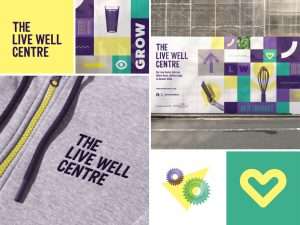
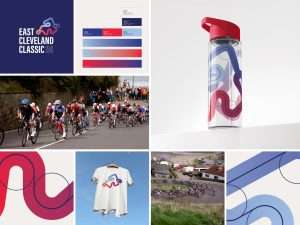
We work with a really wide range of clients, including businesses, government bodies and not-for-profits, as well as SMEs and sole traders. Some of our recent clients include Thirteen Housing, East Riding of Yorkshire County Council, Tees Valley Sport (a Sport England active partnership) and Teesside University.
Whilst some clients come to us for brand identity work, others want to use our design skills to support with their ongoing marketing needs. This could see us working on anything from creative concepts for a strategic marketing campaign, designing an impact report or devising engaging social media content to designing a new company brochure, breathing new life into a tired slide deck or coming up with new ideas on how to engage with staff.
I take every project I work on really seriously and want it to be the best it possibly can be. Whenever I approach a brief, I’m always thinking “OK, so ‘this’ is the obvious option, what’s even better than this?” I want everything I design to feel unique, special and one-of-a-kind, because no two clients are the same.

Jo – Are the industries you work with a reflection of where your work best sits or where you prefer to work?
Beccy – I worked for an ethical design agency for 9 years, which I think has influenced the type of work that I now like to do; we worked on a huge range of projects from rebranding Butterwick Hospice, making time lapse hand-drawn animations for Health Foundation in London and creating bespoke illustrations for a mental health campaign for Newcastle University. I really enjoyed my time there and got to work on some fantastic projects.
I love knowing that the briefs I’m working on are enriching society. My dream brief for Studio Resolve would be to rebrand a botanical garden, museum or art gallery. I love nature or anything a bit arty, so expanding the business into the arts and culture sector would be a perfect fit for me.
I want to continue working in health too, as that’s where a lot of my experience lies. I know the NHS brand guidelines like the back of my hand!
I’m also slightly obsessed with food and drink packaging, so if the right client came along, I would love for us to do more work in that area as well.
Jo – I love the “#creativitywithaconscience” strapline. How do you work that into your client projects?
Beccy – Who doesn’t love a bit of alliteration! What our strapline means is that we never just blindly steam forward on a project without thinking about ‘how’ it gets done.
When I first set up the business, I really wanted to go for B-Corp accreditation, but the huge costs associated with going through the process make it prohibitive for start-ups. A B-Corp company is one that has met incredibly high standards in social and environmental performance, accountability, and transparency, so it’s a brilliant initiative to get involved with, but wasn’t ultimately a good fit for my business. My desire to create an ethical design agency came partly from my past experience or working with those types of clients, but also from being inspired by the ethos of the B-Corp initiative.
I’ve adopted some of the B-Corp ‘standards’ and implemented them in my business, so I know I’m aligning myself as much as I can. For example, I think we’re one of the only brand agencies in the whole of the north east to publish our pricing; we’re fully transparent about our costs and don’t keep them hidden. I also think our pricing is really fair and excellent value for money; those working with me get to tap into nearly 20 years’ worth of knowledge, experience and best practice. We’re a safe pair of hands and clients love our work, so our day rate of £400 is priced to reflect that.
We also take our supply chain seriously; whilst we don’t have the tools to monitor our exact carbon footprint, we do make a concerted effort to buy local in order to reduce our carbon footprint. Our accountant is located in Stockton, our IT support is in Darlington, we tap into Teesside-based freelance talent and use local printers as much as possible.
 Jo – Do you think that gives you an edge in your industry? Why?
Beccy – I hope so! I’d like to think it at least shows that we’re thinking about ‘how’ we do business and have made a start. The most important thing businesses can do is just make a start; I think a lot of people worry about getting it wrong, but doing nothing is the worst thing you can do!
At the moment we’re working on a creative project for a local Sport England pilot scheme that’s aiming to reduce inactivity and obesity in Teesside; everything we’ve created for it is either locally sourced, printed into recycled stock, made from bizarre recycled materials (we have a pen made from wheatstraw!) or purchased from a B-Corp. I loved finding all of these suppliers; it took more effort, yes, but imagine how much we could reduce our carbon footprint if everyone took the same level of care with their purchasing decisions.
Jo – How did this interest in people and sustainability come about? Has it always been something you were interested in or has it developed as you’ve moved through your career? What has influenced it?
Beccy – I just love working on projects that feel wholesome, important and valuable. When I worked for the ethical design agency, every project we worked on was about improving lives, keeping the planet healthy and helping people to flourish. The work of our clients was always about creating positive change and ‘doing good’ in the world, so in a way, I’m trying to recreate that with my own business.
I am trying to be as sustainable as I possibly can with everything I do. I’ve done carbon literacy training and am implementing small changes as I go. As we’re a virtual business, we won’t have a huge carbon footprint anyway, but there are always little wins here and there you can implement e.g. switching to a more responsible printer, sourcing merchandise from a B-Corp, having an online meeting instead of driving to meet someone.
Jo – Can you give us the good, the bad & the ugly of brands from a sustainability/responsibility point of view, in your opinion?
Beccy – I love the Cotopaxi brand. I have one of their jackets for when I’m hiking; they’re all made from sustainable materials and look beautiful as well. They’re part of the 1% for the Planet initiative too, which I’m really interested in joining. I think it’s such a simple but effective concept (great branding too!).
Bettys & Taylors Group do absolutely loads around sustainability across all three of their brands; Betty’s, Yorkshire Tea and Taylors Of Harrogate. I didn’t realise this until I randomly landed on their website a few months ago, and it’s not really something they shout about much either.
Jo – Online or offline marketing & why?
Beccy – It’s definitely a mix of both. I love meeting people face-to-face, but LinkedIn is great for reaching lots of people in ‘one hit’ if you get me. I really enjoy writing, so it’s no hardship for me to keep my LinkedIn profile up-to-date. I enjoy it! I started taking LinkedIn a bit more seriously when I became Creative Director at The Creative Alchemist in Middlesbrough back in 2016 and have kept my presence there fresh and updated ever since.
In terms of offline marketing, I’ve done quite a bit of networking over the past few years; it’s been the main way I’ve got clients. I’ve concentrated mainly on setting up 1-2-1s as I feel you can have more in-depth conversations and make more authentic connections. There are still absolutely loads of people I’d love to grab a cuppa with that I’ve not yet had a chance to speak with (if only I could split myself in two!). I do go networking, but probably not as often as I should! I’ve done a handful of exhibitions over the past few years, probably 1 every 6 months, but would love to do more; I love the buzz of the day.
I’ve also had some great referrals from clients and ex-colleagues, which have really helped. I’ve also had referrals from the 1-2-1s I’ve had, which have been great and very much appreciated.
Jo – What does sustainability or being a more responsible business mean to you as a business and for other businesses and industries?
Beccy – Being more responsible shows how much you care. I don’t want to just churn out work with no thought for its impact on our planet. If there’s a better way of doing something, then I’m all ears. Business can’t be done in a way that’s only about profit anymore. If doing things ‘right’ costs more money, takes more time or requires more effort, then I believe those ‘sacrifices’ need to be made if it’s better for our planet. I love the quote by Barack Obama – “We are the first generation to feel the effects of climate change and the last generation who can do something about it.”
Jo – What do you think the biggest challenge is for SME’s right now & what would be your tip for them to overcome that challenge?
Beccy – I think for SMEs, becoming more sustainable can seem daunting because there’s a learning phase to go through first, before you know what you can feasibly implement. Carbon Literacy Training with Carbon Literacy Project is brilliant, I’d recommend it to anyone who wants to feel more confident about the science behind becoming greener.
I think businesses just need to start, even if it’s doing one small thing slightly better, such as switching energy supplier, buying recycled paper for the office or setting up a recycling scheme. Every small decision adds up to make a big difference.
You can contact Beccy via the Studio Resolve website or find her on LinkedIn.
Want to spotlight? Drop me a message and let’s chat ☕️